Four plant families
Meet the first level of the collection. A family groups related genera and gives your exploration a starting point.
Header photo Samuel Lee, CC BY
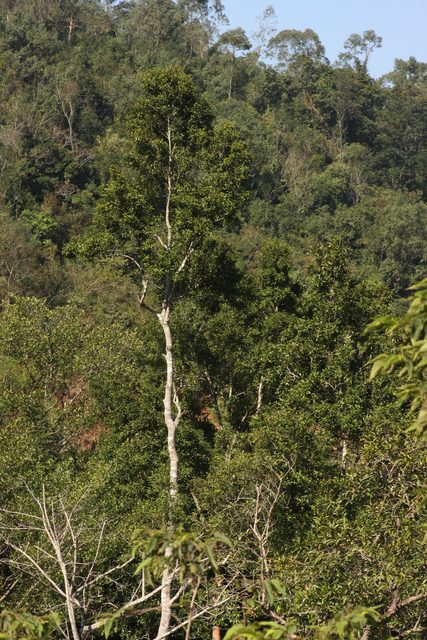
Dipterocarpaceae
Giants of the forest
Begin with Vatica and Dipterocarpus. These two genera belong to Dipterocarpaceae, a family represented here by four tree species. Compare the reference photographs, then follow each genus to its species records.
Look for: Many species carry winged fruits, and the family includes many of the tallest trees in Malaysian lowland forest.
Selected genera: Vatica and Dipterocarpus. Each opens a pair of species.
Botanical source: NParks.
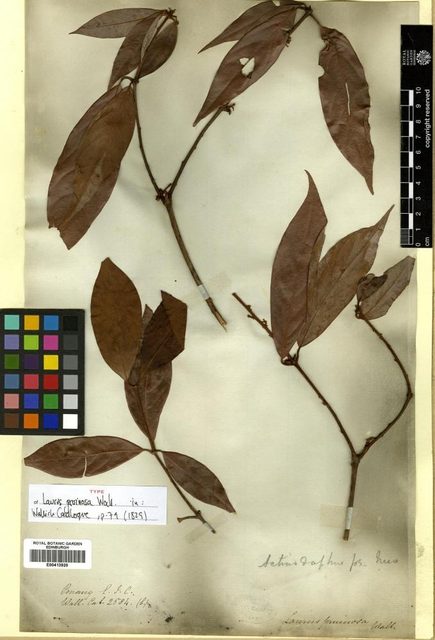
Lauraceae
The laurel family
Explore Actinodaphne and Beilschmiedia. Both genera belong to Lauraceae. Our selection connects four species with their botanical sources, helping you move from a family name to a more precise identification.
Look for: Leaves are often aromatic when crushed. The family also includes cinnamon, bay laurel and avocado.
Selected genera: Actinodaphne and Beilschmiedia. Each opens a pair of species.
Botanical source: Kew POWO.
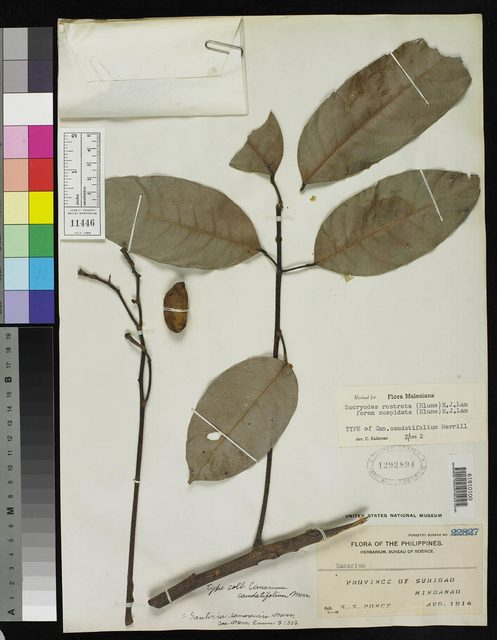
Burseraceae
Resin & rainforest fruits
Meet Canarium and Dacryodes. This collection includes dabai and three related forest trees. The genus links let you compare the names without confusing a shared local name with a scientific classification.
Look for: Bark and wood often hold a fragrant resin. Dabai, a well-known Sarawak fruit, belongs here.
Selected genera: Canarium and Dacryodes. Each opens a pair of species.
Botanical source: NParks.
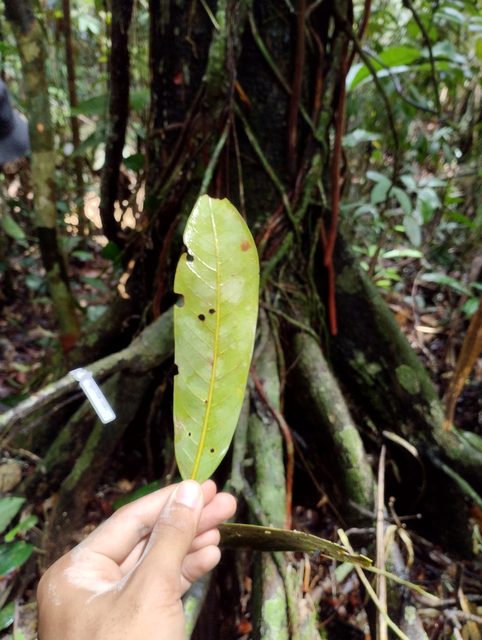
Myristicaceae
The nutmeg family
Discover Horsfieldia and Myristica. The familiar cultivated nutmeg sits alongside regional forest species. The catalogue distinguishes an introduced crop from native plants so that location information stays meaningful.
Look for: Cut bark often seeps a reddish sap, and the nutmeg seed is wrapped in a red aril: mace.
Selected genera: Horsfieldia and Myristica. Each opens a pair of species.
Botanical source: Kew POWO.
Start broad. Follow the connections.
Each of the four families below has a signature that an attentive walker can notice without special equipment: the shape of a fallen fruit, the scent of a crushed fallen leaf, or the colour of resin on old bark. None of these clues needs a living tree to be damaged.
The families were chosen because they are common and important in Malaysian forests. Together they include timber trees, spices and fruits that many Malaysians already know by their local names.
Checking a family in the field
- Look on the ground for fallen fruits and note their shape: winged, fleshy or wrapped in a coloured layer.
- Pick up a fallen leaf, crush it gently and notice any scent.
- Look for dried resin or coloured sap on old wounds in the bark. Never cut a tree to check.
One clue per family
- Dipterocarpaceae
- Winged fruits.
- Lauraceae
- Aromatic leaves.
- Burseraceae
- Fragrant resin.
- Myristicaceae
- Reddish sap, red aril.
Family sources: NParks Flora & Fauna Web and Kew Plants of the World Online. Clues are general features and vary between species.
Families at a glance
| Family | Known as | Genera in this guide | A clue to look for |
|---|---|---|---|
| Dipterocarpaceae | Giants of the forest | Vatica, Dipterocarpus | Winged fruits |
| Lauraceae | The laurel family | Actinodaphne, Beilschmiedia | Aromatic leaves |
| Burseraceae | Resin & rainforest fruits | Canarium, Dacryodes | Fragrant resin |
| Myristicaceae | The nutmeg family | Horsfieldia, Myristica | Reddish sap, red aril |